| Amber homepage at CERN | |||||||||||||
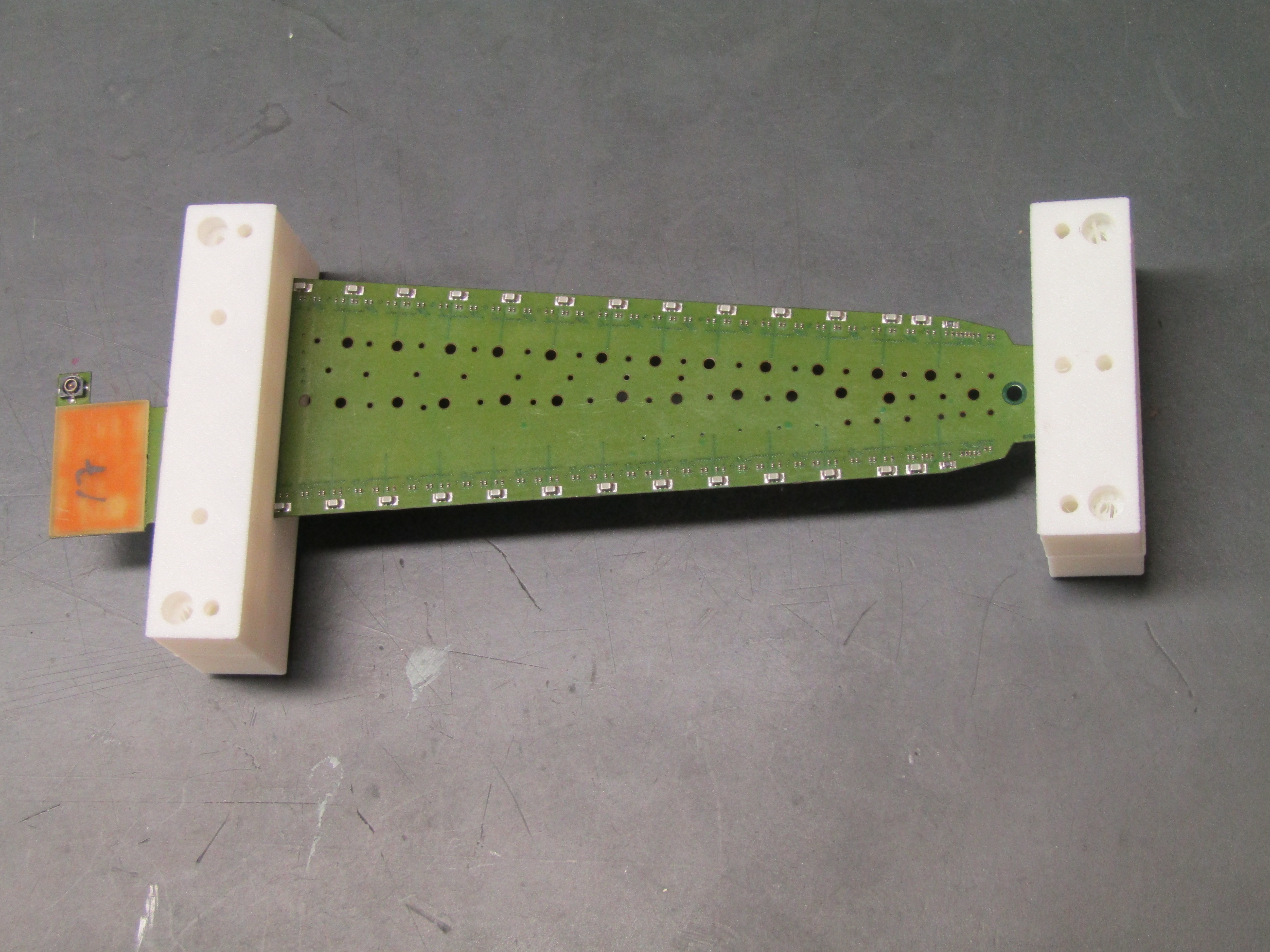
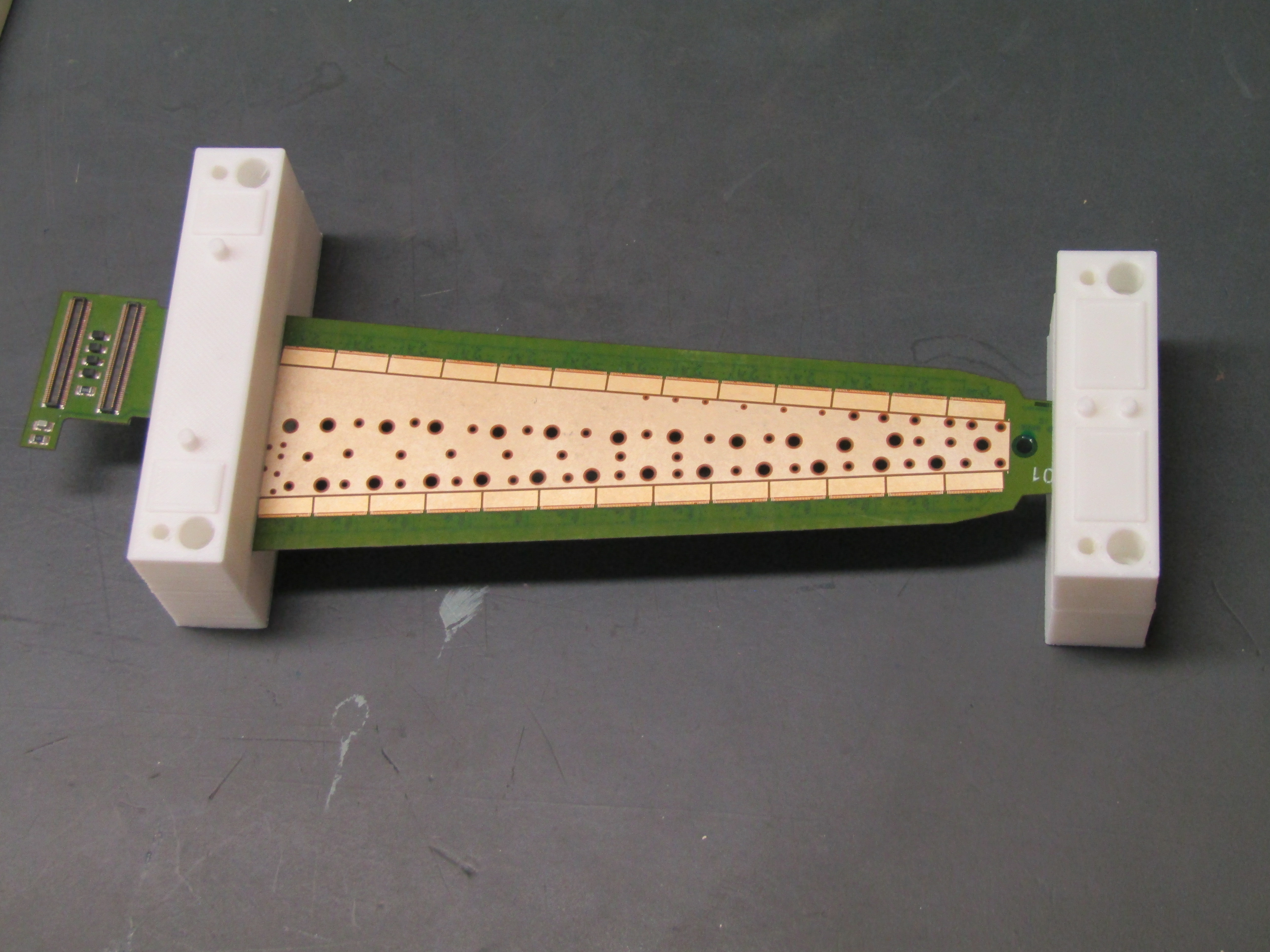
| Printed mounting blocks. These stack like legos,
15mm high for now.
| 
| ||||||||||||
| However, a populated wedge has silicon all the way to the top, as well as wirebond encapsulation compound. | 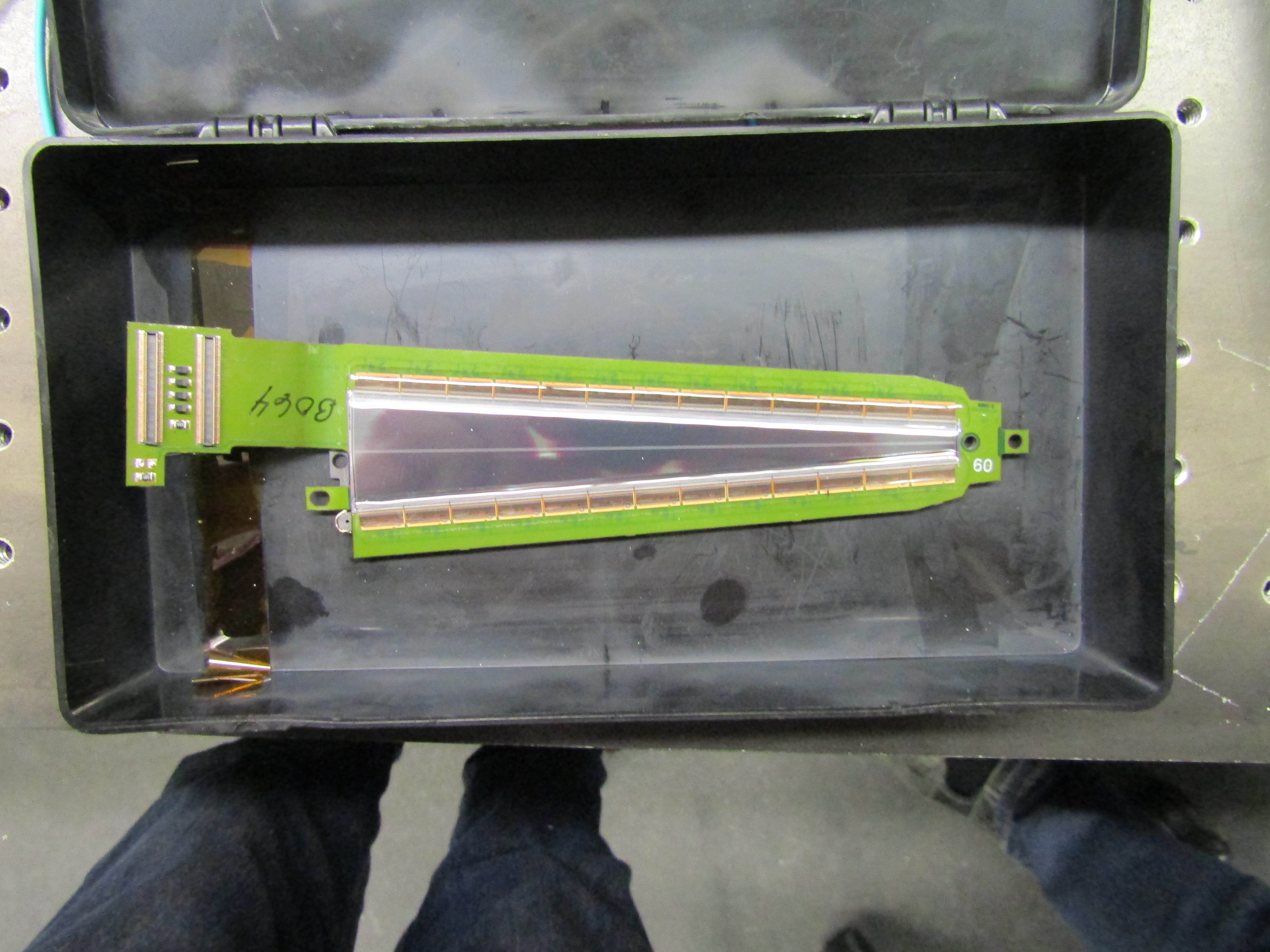
| ||||||||||||
| On the back, there are graphite pads, originally for registration and heat transfer. | 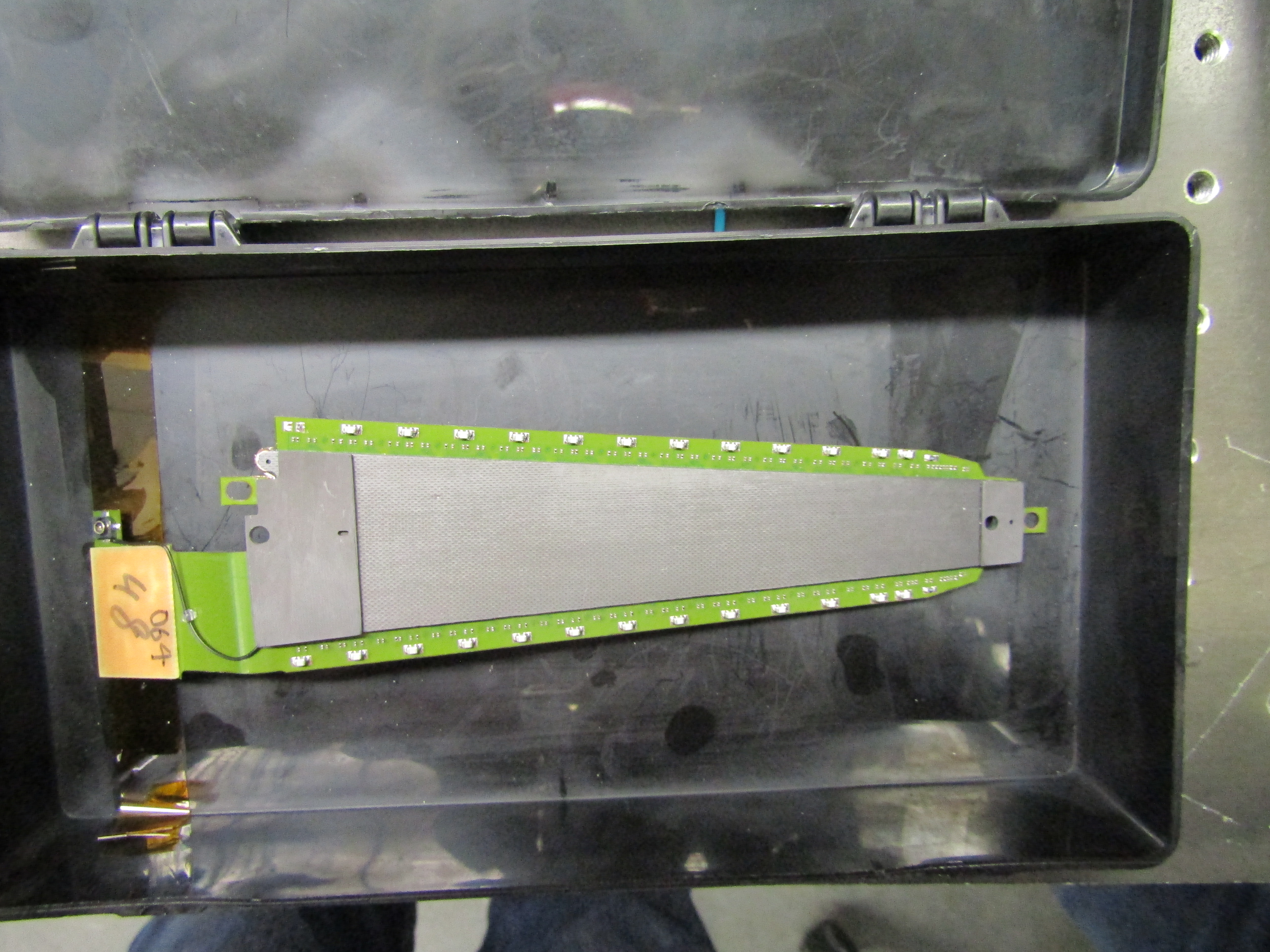
| ||||||||||||
| The spacing between planes in the FVTX was 60.3 mm, and each
wedge has its own custom cable.
Image from FVTX%20cooling%20routing%203-8-2010.easm Disks do not exactly line up: they are rotated by multiples of 0.9375° | 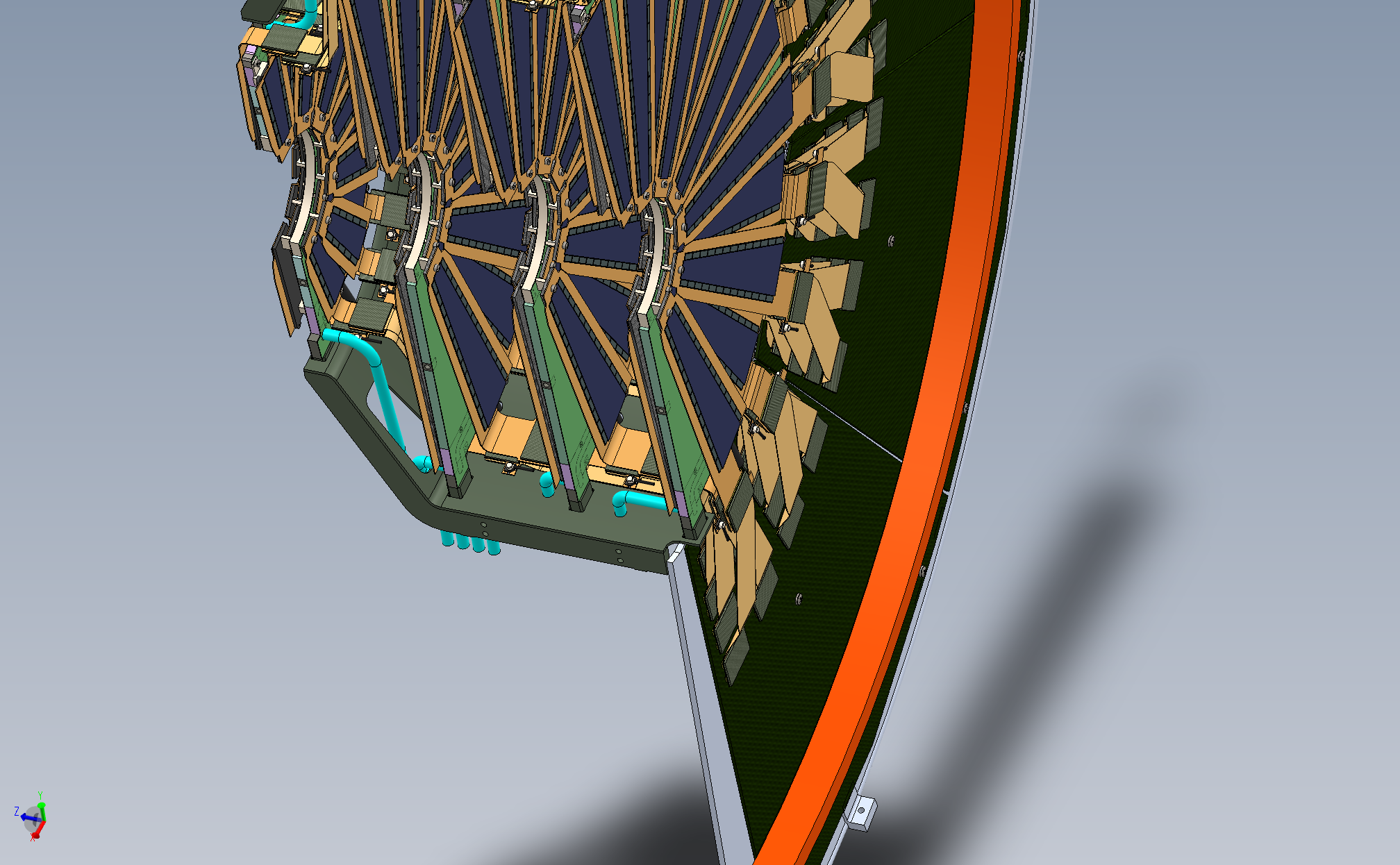
| ||||||||||||
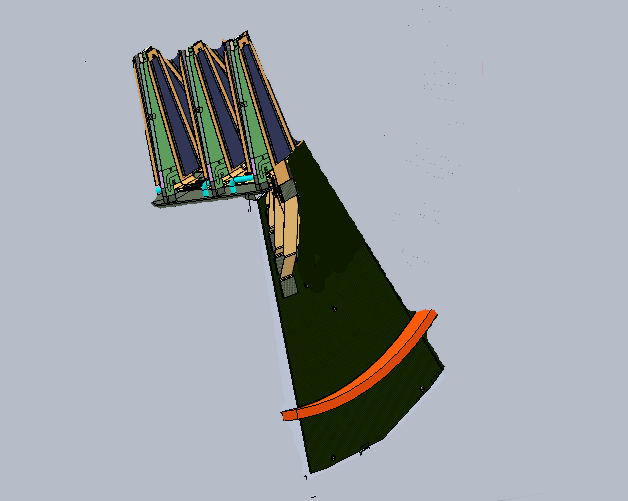
| For the small prototype, an existing ROC will be used. Because
of constraints of the cables, the placement of the wedges relative
to the ROC is the same as in the FVTX. Since all cables from a given
disk have the same angular offset, it is not possible to make the
wedges line up.
The dark box will have to enclose much of this whole assembly.
| 
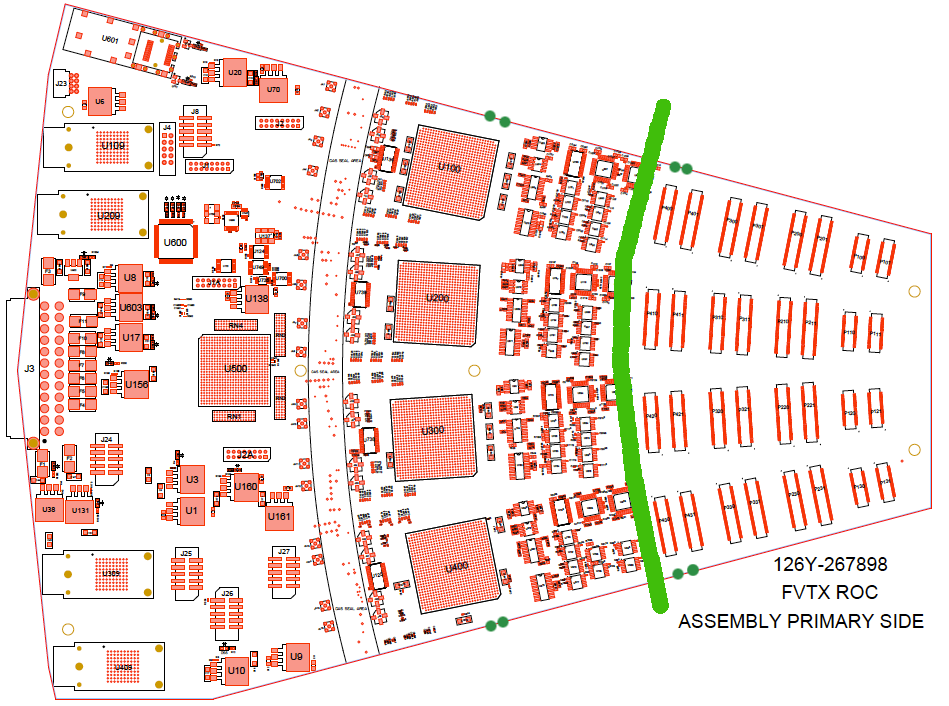
If the enclosure boundary is just to the left of the connectors, all
the hot chips are on the outside.
|
| 
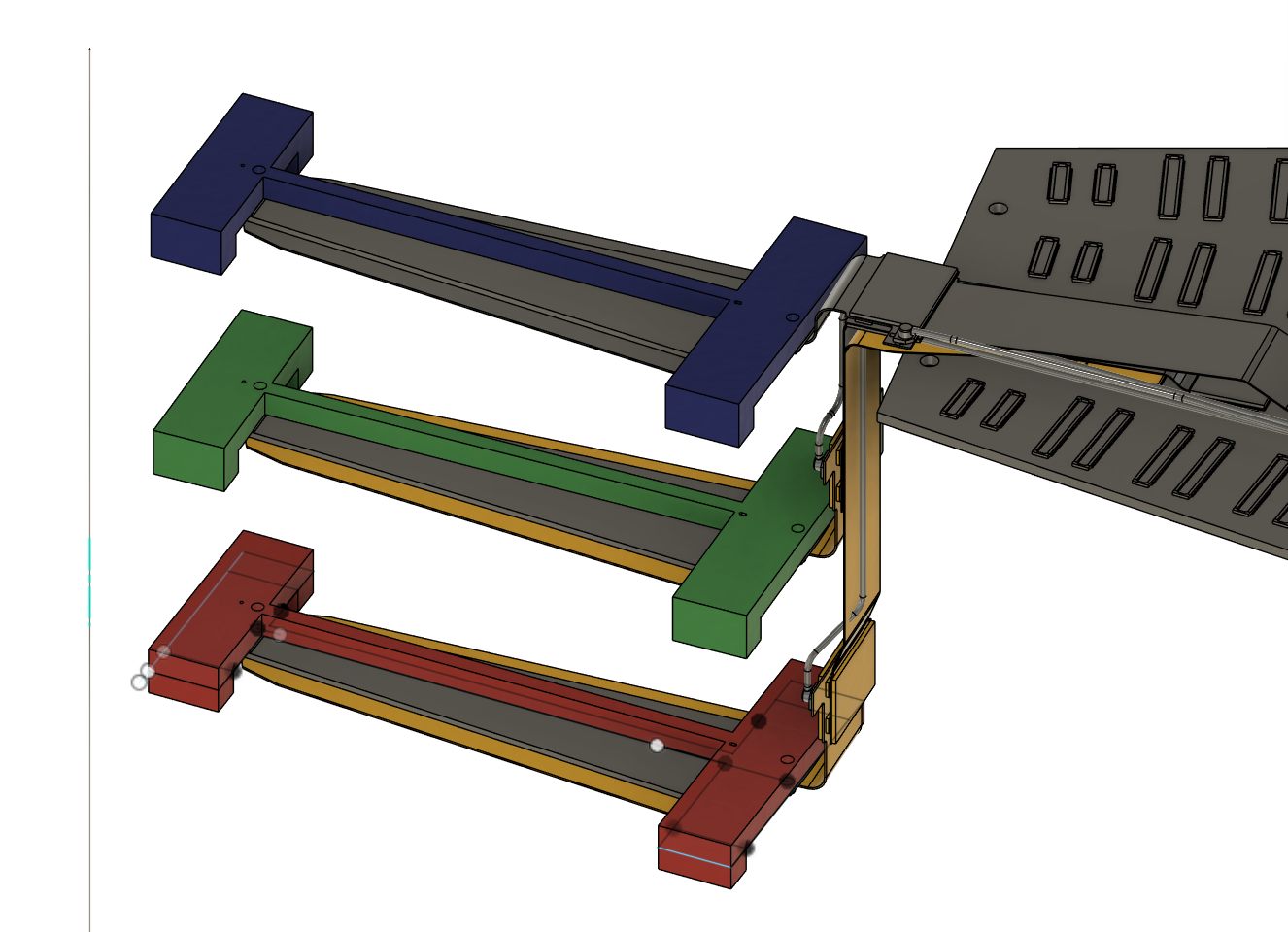
T-blocks hold the wedges with 2 screws. The red, green, blue T-blocks
are not lined up vertically, but rotated slightly around the center axis
(shown).
| | 
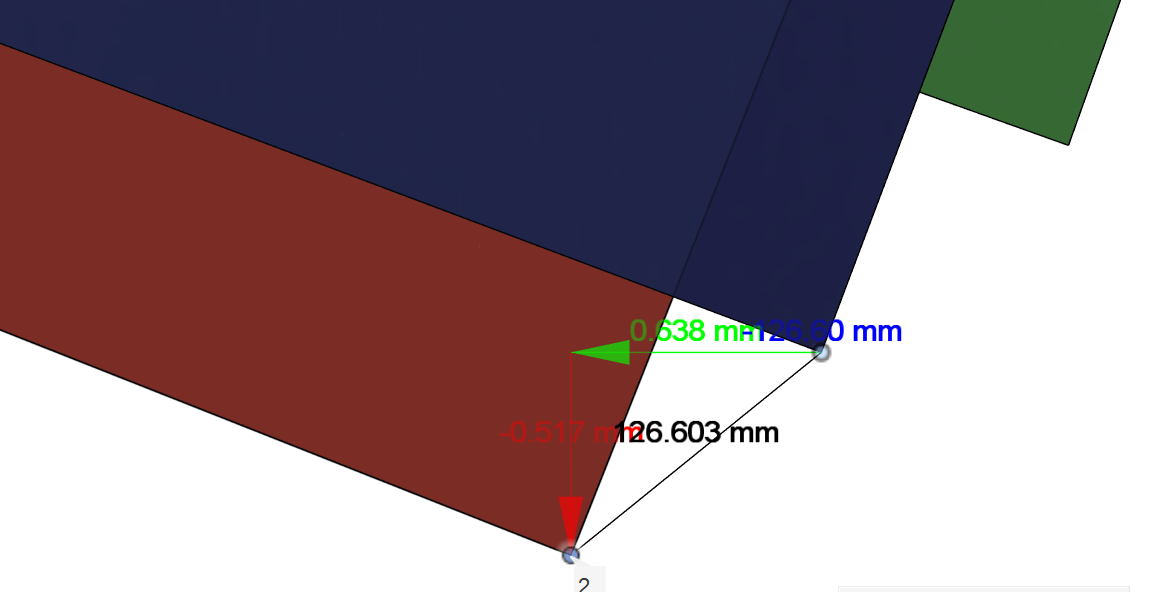
At the wide end, the rotation amounts to 5.8 mm from red to green,
and -2.9 mm from green to blue.
|
At the narrow end, it is 1.6 mm from red to green, and -0.8 mm from green to blue. | 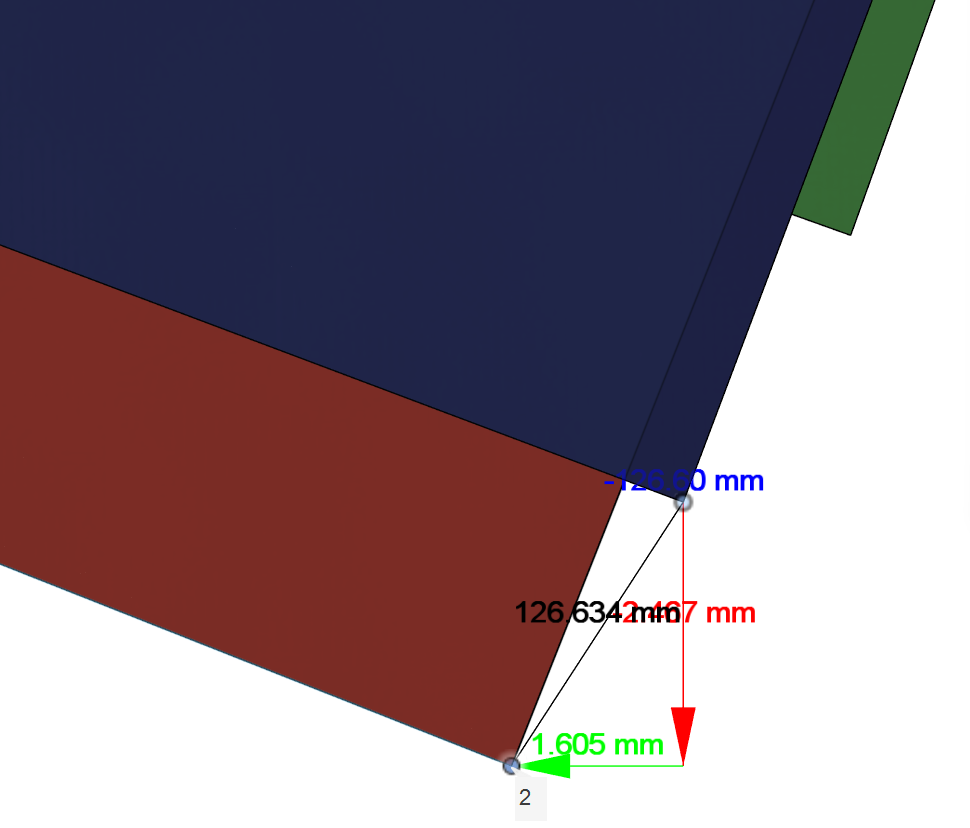
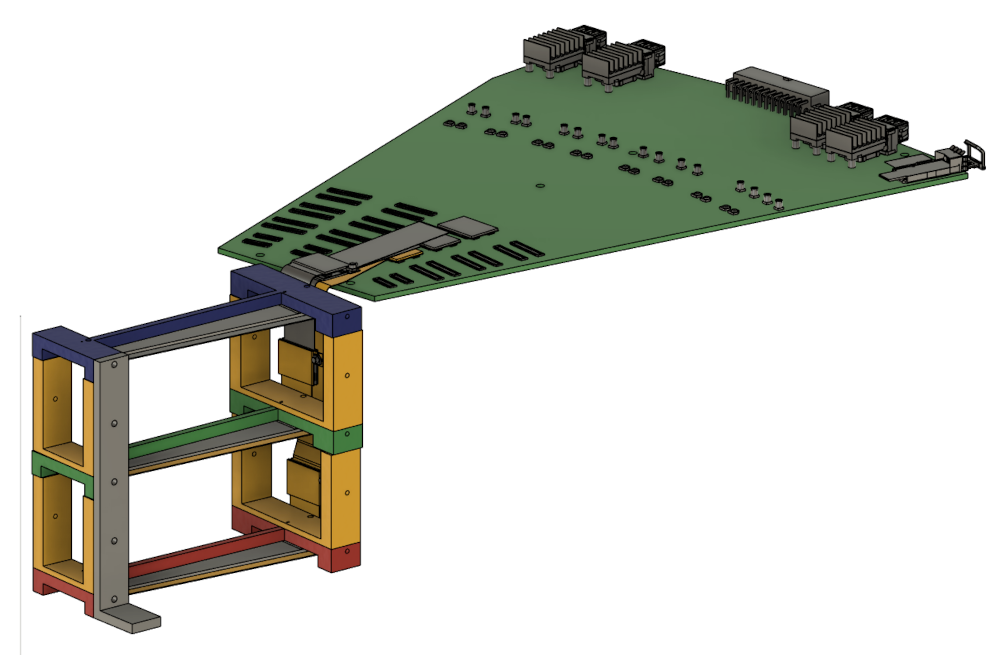
Trim the ends of the R,G,B frames so the end surfaces line up.
Space with the yellow spacers, and connect with 4 gray brackets
(one shown). Holes are for 4-40 screws.
|
| 
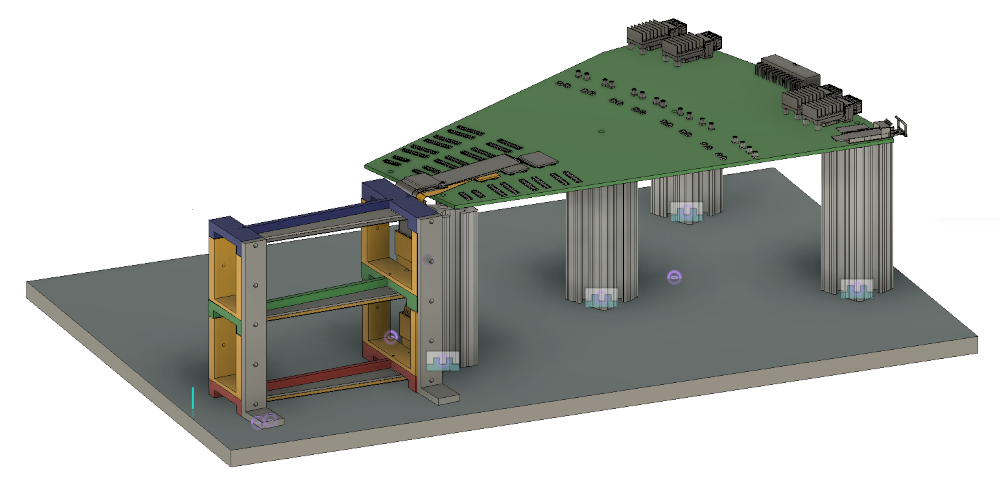
A 1/2" support plate holds supports the wedge fames, and
15-series 80-20 posts support the ROC.
| | 
New frame. We got 3 cables, but they are all identical, and they
have a single bend (~90°) in them. So we
have to mount the wedges perpendicular to the ROC, and the spacing
is determined by the connector spacing on the ROC, which is
25 mm.
| red_frame_b.stl green_frame_b.stl blue_frame_b.stl spacer_1b_b.stl spacer_2b_b.stl spacer_3b_b.stl spacer_4b_b.stl bracket_1b.stl (4×) | 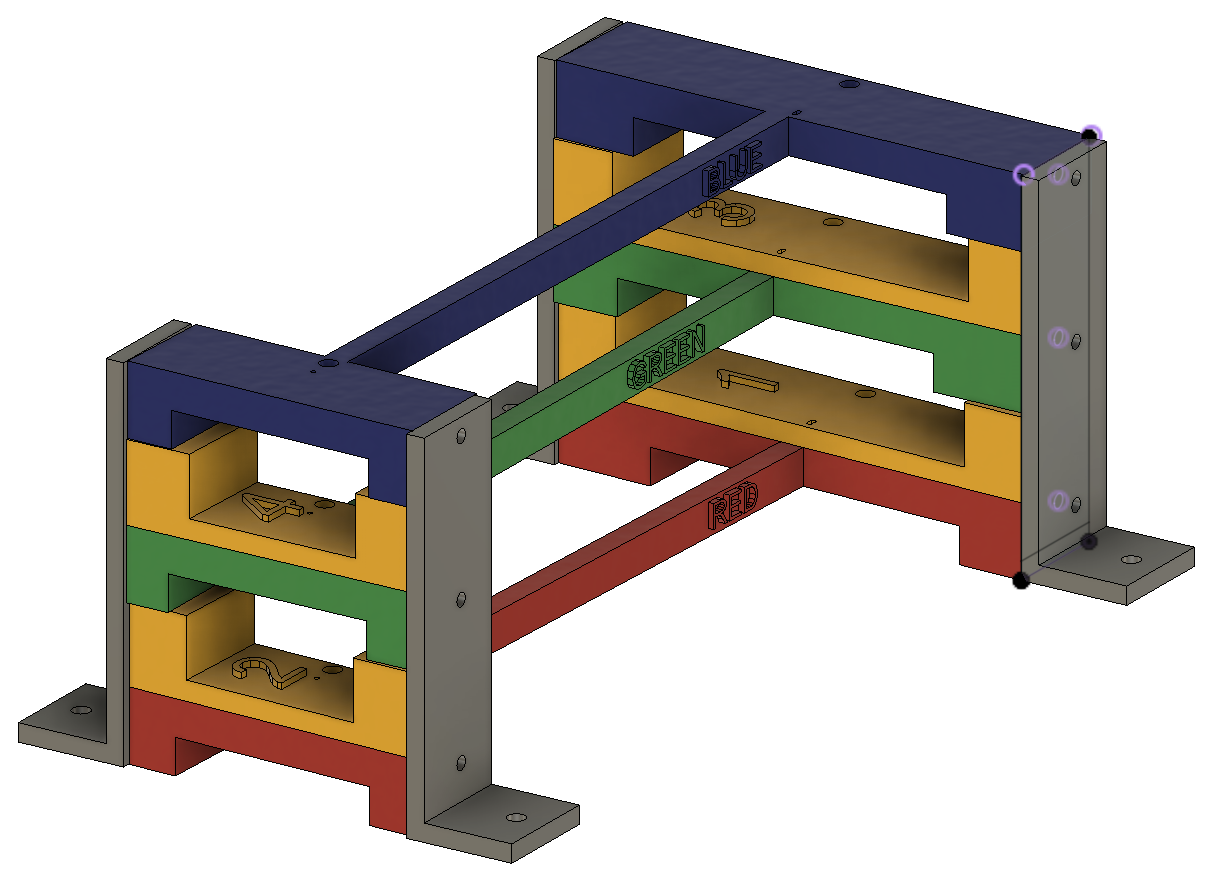
|